Diving Tips and Best Practices
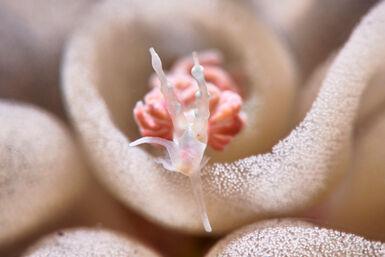
Important considerations
- Always look but don't touch. If you're lucky enough to find a nudibranch, don't move it or collect it. As with all marine life, it's always best to observe from a respectful distance and to leave it to its natural behaviours.
- Use a small tool to carefully flip over rocks or move algae if you're exploring rock pools or piers, but be sure to return everything to its original place. Afterall, you wouldn't want someone to turn your house upside down, so have the same attitude with marine life.
- Buoyancy is always key. Whether you're exploring a muck site and don't want to fin up lots of sand, or looking at a coral reef, remember that your movements can have impacts on your surroundings and disturb nudis or other marine life. So, let's keep floating and be sure not to kick any coral.
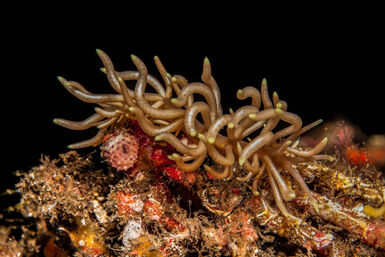
How to find a nudibranch
- Due to their tiny size, nudibranchs can be tricky to spot, so you need to train your eyes to notice unusual specks of colour and shapes that don't quite match the reef or seabed. They are typically found near their food source, so keep an eye on sponges, corals or other sea life.
- Check tide pools during low tide or look on the sides of docks and piers where algae and other small organisms live.
- Beauty is often found in the muck, so consider a muck dive. Sandy or silty sea floors can be an excellent place for finding nudibranchs that are well-camouflaged against the sand.