
Imagine swimming through a coral reef where every surface emits radiant greens, reds and blues, transforming the ocean into a magical, neon landscape. This is fluorescent diving, or fluo diving. By using specialised lights and filters, fluo diving allows you to witness the underwater world in glowing, vibrant colours that are invisible to the naked eye. Keen to know more? Read on to find out the best places for fluo diving...

What is fluo diving?
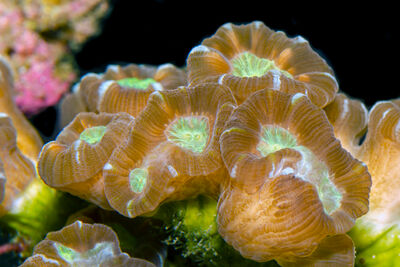
Also known as fluorescent, glow or UV diving, fluo diving turns the reef into an otherworldly scene straight out of Avatar. Ready to take the plunge? Gear up just before dusk and enter the water as night falls, usually with a normal dive light to ease your descent. Once you're in the dark, switch off your light and turn on your blue light to illuminate the eerie creatures of the reef. The reason why corals and other forms of marine life fluoresce is still unclear. Some think it's a form of protection against harmful sun rays, though this hasn't been proven.

How does fluo diving work?
Though often referred to as UV night diving, fluo diving doesn't actually use UV light. Instead, it relies on a special blue light and a yellow filter placed over your mask to reveal the reef's biofluorescence. Certain marine species absorb this blue light and produce proteins that generate fluorescence (which is different from bioluminescence, where the organism emits its own light). The result is a spectrum of vivid colours from neon greens and oranges, to yellows, pinks and purples. Not every resort offers fluo diving though, due to the expensive equipment needed and the cost versus demand, so be sure to double-check in advance, if this is something you're keen to try.
Where to Go Fluo Diving
Wakatobi, Indonesia
Where better to start your fluo diving adventure than Wakatobi Dive Resort, one of the early pioneers of the phenomenon? Perched on the southern tip of Sulawesi, Indonesia, this world-class resort is renowned for its marine biodiversity, with over 400 species of coral and 700 species of fish. Watch as colourful coral branches glow from within and unassuming shrimp transform into a neon spectacle.
Lembeh Resort, Indonesia
Next up is Indonesia's Lembeh Resort, located in the famous Lembeh Strait, a hotspot for fluo diving. Witness corals reveal hidden crustaceans nestled within them and keep an eye out for nudibranchs, cephalopods, worms, clams and jellyfish as they react to the blue light, adding even more magic to your dive. With so many rare nocturnal critters, you'll find plenty that glow in the dark.
Mafia Island, Tanzania
Mafia Island, located at the mouth of the Rufiji River Delta in Tanzania, is a hidden gem when it comes to fluo diving. With its pristine reefs and rich biodiversity, the underwater world here comes alive at night. Home to over 50 types of corals and 460 species of fish, you'll likely spot vibrantly coloured marine life during your dive after dark. For clear conditions and warm waters, plan your dive between November and March, when visibility is at its peak.
Bonaire
Finally, Bonaire rounds off our list of the best places for fluo diving. Part of the Dutch ABC Islands (Aruba, Bonaire and Curacao), about 25% of the marine life here is fluorescent. Prepare for colourful coral reefs and close-up encounters with tarpons, as these large fish are known to hunt in the glow of your dive light. According to our Original Diving expert, Rachel, Bonaire is the ideal destination to try this underwater activity, so you're in for a treat.


