
Okay, okay - it's no secret that we're at our happiest when we're 10m under the water, surrounded by shimmering shoals and colourful coral. But did you know that scuba diving has plenty of other benefits, too? From mental and physical health to marine biodiversity, we're here to show you that diving is an all-around force for good. Ready to reap the rewards? Read on to discover the benefits of scuba diving…

It reduces stress and anxiety
When you think of meditation, you probably picture sitting cross-legged with your eyes closed (not underwater with a mask and fins on). Meditation, however, really just means that you're focusing all of your attention on one thing, which, when diving, is your breathing and surroundings. This comes with a whole host of mental health benefits, from reducing stress and anxiety to improving age-related memory problems.
And there's more. The state of 'awe' you experience when you catch a glimpse of a whale shark or glide down a vertical drop-off does more than just create lasting memories. Feeling awe-struck can actually transform your perspective on life, leaving you feeling refreshed, calm and ready to take on the world when you surface.

It improves your physical fitness
Everyone knows that swimming is great for our physical health, but diving takes things one step further. Unlike splashing about in your local pool, diving involves swimming against the ocean's currents, which raises your heart rate and improves your endurance.
It might surprise you, but building muscle is also one of the many health benefits of diving. While fin kicking is great for aerobic fitness, it also requires engagement of the leg muscles and core, building up strength and flexibility. The workout continues outside of the water, too, as lifting weight belts and tanks tones and strengthens your muscles. Who needs the gym?
It allows you to find like-minded individuals
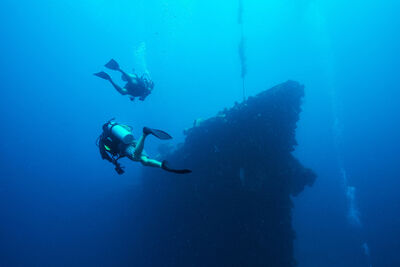
It can be frustrating when your friends and family don't share the same passion for diving, but don't let that stop you from heading out into the water. One of our favourite benefits of scuba diving is the opportunity to make new friends, whether in local diving clubs or dive centres abroad.
Dive groups allow you to meet people on the same wavelength (literally), take on exciting adventures in new places and learn from those more experienced than you. Your newfound community will bring with it a sense of belonging and emotional support, meaning your stress levels will be reduced (and you can stop nagging the landlubbers to join in).
It helps to clean up the ocean
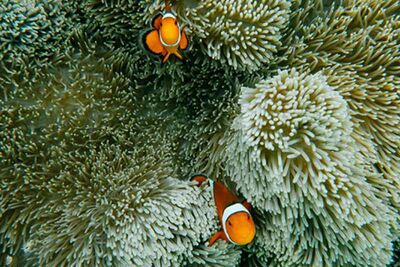
We're firm believers that divers are the best ocean ambassadors. Incredible diving experiences wouldn't be possible without healthy reefs and rubbish-free water, and scuba divers are some of the only people likely to see the damage that pollution does to the underwater world.
Divers can get involved in several established conservation efforts, most notably PADI's 'Dive Against Debris'. This global initiative not only has divers collect marine debris while out on dives, but also encourages them to report their findings to help researchers and policymakers in their mission to clean up our seas. The best part? This isn't just a benefit for divers. Reducing marine debris helps millions of sea creatures worldwide by protecting their ecosystems, which results in cleaner seafood and better public health.
It supports marine life conservation
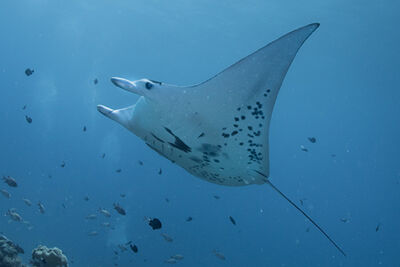
Many of our team's best underwater moments are defined by interactions with aquatic animals - whether that be Emily swimming with whale sharks in Indonesia or Rachel witnessing Oceanic whitetips in Egypt - so protecting ocean life is pretty close to our hearts. We often hear stories about human interference damaging underwater ecosystems, but scuba diving can be a force for good when it comes to conserving marine life.
Dive tourism generates a large amount of revenue, which is often used to fund marine conservation in popular and well-managed dive sites. Hardcore divers are also more likely to be drawn to Marine Protected Areas (MPAs) - sections of the ocean established to conserve marine life - and will pay more to be allowed to observe their pristine reefs and underwater ecosystems. As well as generating revenue for conservation, this also demonstrates the economic value of intact marine environments, which will hopefully expand the number of MPAs and allow ocean biodiversity to flourish.


