
Sulawesi is a huge island. The 11th largest in the world, in fact. Known for its mountainous terrain and lush rainforests, Sulawesi is a treasure-trove of biodiversity with over 450 bird species and 5,972 vascular plant species, 2,225 of which are endemic, alongside dugongs, coral reefs and the elusive Sulawesi coelacanth. Keen to learn more? Read on for some of our favourite Sulawesi facts.
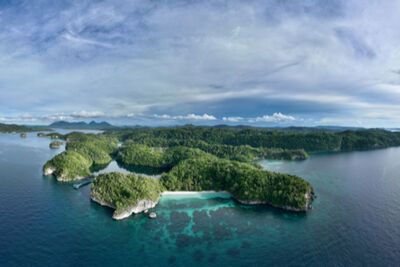
1. Sulawesi is in the centre of the Indonesian archipelago
Let's find this 'k'-shaped island on the map. Sulawesi, sometimes known as Celebes, is part of the Great Sunda Islands and is located in the centre of the Indonesian archipelago. To the north of the island is the Celebes Sea, across from which lies the Philippines. To the east is Borneo, and in the south is Mindanao and the Sulu Archipelago.
2. Sulawesi is the 11th largest island on Earth
Covering almost 72,000 square miles, Sulawesi is the 11th largest island on Earth, after Ellesmere Island in Canada. Sulawesi has a population of almost 20 million people, and its largest city is Makassar on the southwest peninsula, home to 1.25 million people.
3. Origins of the name ‘Sulawesi’
We bet you don't know this next Sulawesi fact. The name 'Sulawesi' is thought to come from a combination of the word 'sula', meaning island and 'besi', meaning iron, likely related to the history of iron exports from the Lake Matano iron deposit. You may know that Sulawesi is also referred to as Celebes, like the sea that borders it to the north. This name was given to it by a Portuguese explorer and could be the Portuguese version of 'Sulawesi'. However, when Indonesia gained independence in 1945, the name Sulawesi became the most common name for the island.
4. Sulawesi is part of Wallacea
Wallacea is a biogeographical region that includes other islands such as Lombok and Timor. This region boasts biodiversity from both Asia and Australia and has become a conservation hotspot due to the vast number of endemic species found here. One of our favourites is the Eucalyptus degluta, also known as the rainbow eucalyptus because of its colourful bark.
5. Terrific tropical rainforests
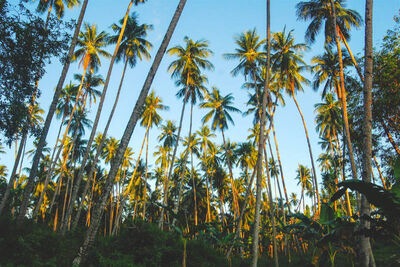
Sulawesi is best known for the tropical rainforests that once covered the entire island. Today, however, these forests are being degraded or eliminated thanks to agricultural practices, including logging and mining. Despite the deforestation, Sulawesi still has an impressive biodiversity profile. In fact, Sulawesi is home to 5,972 vascular plants of which 2,225 are endemic, as well as fourteen different forest ecosystems.
6. 127 mammals call Sulawesi home
There are 127 species of native mammals in Sulawesi, and 79 of these are endemic to the island. These include the Sulawesi bear cuscus, the dwarf buffalo and the babirusa - a wild pig with curved tusks.
7. Sulawesi is home to six giant clam species
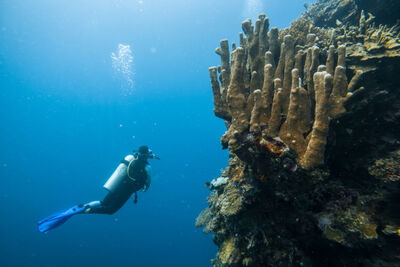
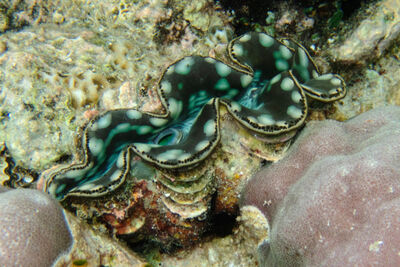
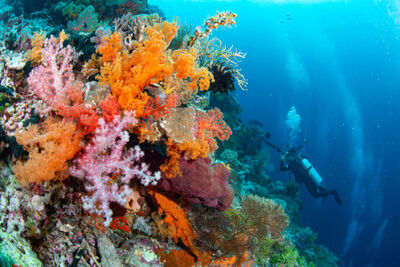
Of course, we can't have a Sulawesi fact file without dipping below the surface. Surrounded by biodiverse waters with large seagrass meadows and coral reefs, Sulawesi is a diver's dream. In these waters, you can find leatherback, hawksbill and green sea turtles alongside the elusive dugongs and six of the world's seven giant clam species. These clams can weigh over 200kg and reach up to almost four feet in length. Migrating whales, including the sperm, pygmy sperm and killer whale also pass through Sulawesi's surrounding waters.
8. Sulawesi is home to 55 endemic freshwater fish species
Around 70 species of freshwater fish call Sulawesi's waters home, including 55 endemic species. Most of the freshwater fish found in Sulawesi are ricefish, gobies and Telmatherinid sailfin silversides.
9. Sulawesi is home to the Sulawesi coelacanth
Now for one of our favourite facts about Sulawesi: the island is home to the Sulawesi coelacanth, one of only two species of coelacanth and a prehistoric survivor that offers an insight into the beginning of fish life and the first tetrapods. Despite not being a fishing target, this deep-sea dweller is classified as vulnerable by the IUCN Red List, as it's often caught as bycatch.
10. The megaliths of Sulawesi
The Bada Valley, located within the Lore Lindu National Park, is home to 400 granite megaliths which have been dated between 3000 BC and 1300 AD. Only discovered in the early 1900s, these megaliths are shrouded in mystery. Some are buried or almost completely covered by grass, while others rise to 13 feet high. Some of the stones take on human features, while others are shaped in different, unknown forms. A crazy fact about these statues is that the monoliths' stone is not a stone found on the island, meaning it must have been transported there. No human settlement remains have been found in the area, however…


