
Coral might often be mistaken for a vibrant underwater plant, but most divers will know that corals are actually animals. And, while most divers will have done their fair share of swimming alongside vibrant coral reefs, many won't have witnessed one of their most interesting features: the process of coral reproduction (yes, really). The collective term for this act is 'spawning' and, in our expert opinion, it's one of the most fascinating spectacles to witness underwater. Intrigued? Read on to find out about all things coral spawning…
What is coral spawning?
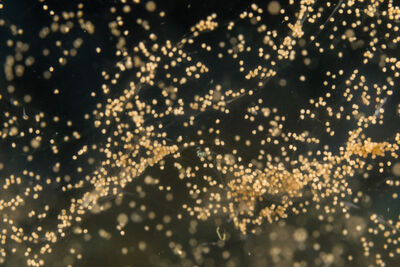
Coral spawning is a mass reproductive event that generally occurs once per year. Triggered by environmental cues, such as the lunar cycle or water temperature, coral spawning typically takes place shortly after the full moon, under the protective darkness of night.
To further protect the coral's reproductive cells (or gametes) from predators, many other marine species, such as invertebrates and sponges, will spawn simultaneously in an underwater 'safety in numbers' policy, and in certain areas, coral colonies will synchronise their spawning to release sperm and eggs into the water column at the same time. If you're lucky enough to be underwater when this happens, you'll be treated to a mesmerising view of the gametes drifting through the water, in what is often described as an 'underwater snowstorm'.
Why is coral spawning important?
Coral spawning isn't just to impress us divers: it's crucial to maintaining healthy reefs. Perhaps most importantly, the process helps to regenerate new coral colonies. Fertilised eggs develop into tiny, free-swimming larvae (planulae), which float in the water column for several days (or weeks) until they eventually settle on the reef substrate. The planulae then begin budding, forming healthy new coral colonies over time.
On top of that, the simultaneous release of gametes from many different coral colonies ensures great genetic diversity. For example, if certain coral species have survived a bleaching event, it's crucial that these colonies spawn to ensure the transfer of resilient genes to the next generation. This is a key factor in the long-term survival of reefs, allowing them to become more resilient to climate change, declining water quality or other threats.
What are the best places to see coral spawning?
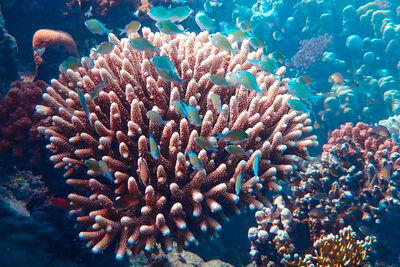
While any natural event is subject to the creatures themselves, divers can increase their chances of seeing coral spawning by diving in areas where operators conduct spawning dives, or diving at a time when spawning is most likely (i.e. following a full moon). Thanks to years of research, dive operators and scientists can now accurately predict when coral spawning will occur, and some liveaboards even operate spawning-specialist trips over predicted dates to allow divers to experience this fascinating spectacle. Intrigued? Read on for our top places to see coral spawning…
1. Grand Cayman, Cayman Islands
For the past 20 years, coral spawning has been witnessed regularly around Grand Cayman, most notably on the East End. Dive operators here are experts on the phenomenon, and you'll likely be given a presentation before your dive explaining how to identify the coral heads that will be spawning and what to look out for when it happens. Mountainous star corals tend to be the most impressive around Grand Cayman, with the colonies getting ready to spawn ranging from the size of a football to the size of a hatchback car.
When to go: The best night for the spawn is typically six days after the full moon of September, when the water temperature is a toasty 30°C. While the spawn can occur in August and October, September is the most reliable month.
2. Bonaire
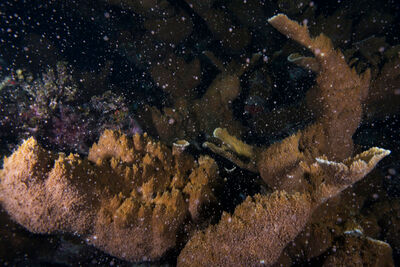
With a whopping 65 dive sites gracing its shores, Bonaire offers divers a large amount of freedom when it comes to witnessing coral spawning. Perhaps most excitingly, the island is home to staghorn coral, an extremely rare coral species that, during spawning, releases its gametes all at once in a fascinating flurry of tiny pink and orange orbs. If you happen to miss the staghorn spawning, don't worry: around 19 species of corals have been recorded spawning around Bonaire, so you'll have a choice on which ones you'd like to see.
When to go: The best time to witness coral spawning in Bonaire is between April and October. Staghorn corals often spawn in the week after the August full moon, with elkhorn corals spawning days in the first two weeks of the month.
3. Great Barrier Reef, Australia
Coral on the Great Barrier Reef does not all spawn at the same time: inshore reefs typically begin spawning one to six nights after the first full moon in November, whereas outer reefs spawn later. You can witness the phenomenon in the waters around Cairns or Townsville, but we think the best place to see it is Lady Elliot Island. Here, you can see the spawning from land, or, if the tide's high enough, you can see it up close when snorkelling in the lagoon at night.
As with the other destinations, the best time to see coral spawning is in the week after the full moon, and it's most likely to take place at least three hours after sunset. Visit in October and November for inshore reefs and the northern barrier reef, or December for offshore and southern reefs.
4. Ningaloo, Australia
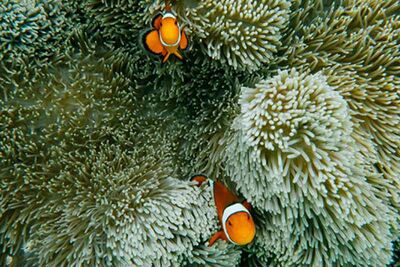
It might not be as well-known as the Great Barrier Reef, but the UNESCO World Heritage-listed Ningaloo Reef is one of the largest fringing reefs in Australia (and, indeed, the world). Spawning here takes place during the spring, when more than 200 species of coral can spawn in the waters here. This mass activity drives other creatures - like krill and plankton - to feed on the spawn, and their presence, in turn, draws in migratory species like whale sharks.
When to go: Unlike its Aussie counterpart, the best time to see coral spawning in Ningaloo is early in the year, around five to ten days after the spring full moon in March or April.
5. Palau, Micronesia
Last (but certainly not least) is Palau, Micronesia. Coral spawning in Palau tends to occur between one day to a week after the full moon and a few hours after sunset. While there, you can visit the Palau International Coral Reef Center to enjoy lectures and information about the spectacle so that you're well prepared for the spawning to occur.
When to go: The best time to see coral spawning is Palau is between April and May, depending on which coral species you'd like to see. April will be mostly stony corals spawning (like Acropora and Scleractinia), while May sees non-Acropora corals spawning.


