
June 2025 brought some long-awaited diving news: the launch of the world's first indigenous-led, multi-national ocean reserve protection initiative. Set across the waters and territories of the Solomon Islands, Papua New Guinea, Vanuatu and New Caledonia, the Melanesian Ocean Reserve is expected to span over two million square miles of ocean and islands and aims to protect underwater ecosystems, support sustainable initiatives and centre indigenous communities. Intrigued? Read on to find out more about the Melanesian Ocean Reserve…
What is the Melanesian Ocean Reserve?
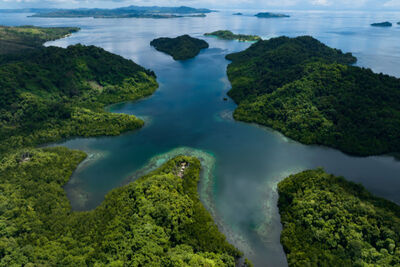
The Melanesian Ocean Reserve is set to be the world's largest interconnected marine reserve, operating over an area the size of the Amazon rainforest. The concept behind this initiative is simple: the Indigenous Peoples who have occupied these waters for centuries should be the governing authority responsible for the safeguarding and security of these areas in the long term.
Instead of establishing a single new Marine Protected Area, the reserve is adopting a multi-zone structure, encompassing each nation's existing marine protected areas (MPAs), locally managed marine areas (LMMAs) and community-based resource management areas (CBRMs). By combining the traditional knowledge and authority of local communities with broader ocean governance, the reserve ensures that Indigenous Peoples remain central to protecting the ocean's future.
What activities are allowed in the reserve?
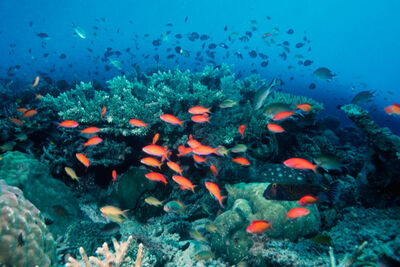
The reserve aims to protect biodiversity, ancestral fishing grounds and sacred sites, while protecting key revenue sources and creating a platform for new investment opportunities and sustainable development. Luckily, there are a number of initiatives which strengthen communities without harming the ocean, including small-scale sustainable fisheries, inter-island cultural exchanges, renewable ocean energy and ecotourism ventures.
While it might seem contradictory that commercial fishing is still allowed within the Melanesian Ocean Reserve, the ultimate priority is the ecological sustainability and long-term health of the fisheries. To achieve this, the reserve works with the Parties to the Nauru Agreement (PNA), a group of eight countries - including Papua New Guinea and the Solomon Islands - that control the world's largest sustainable tuna purse-seine fishery while minimising bycatch. This cooperation allows the region's marine life to thrive while still encouraging economic opportunity for Indigenous Peoples.
The reserves' multi-zone structure reflects the histories, needs and priorities of Indigenous communities across the participating countries, integrating cultural sovereignty, ecological protection and economic opportunity. At the same time, each country will be able to design its own zones in ways that reflect its laws, customs and priorities - making the Melanesian Ocean Reserve truly the best of both worlds.
What does diving look like in the reserve?
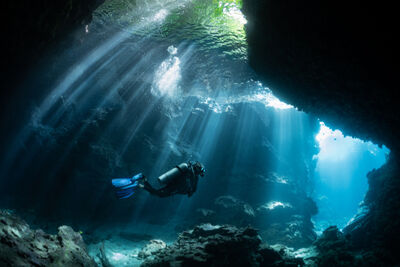
If you're anything like us, the question on the tip of your tongue will be: can we still dive here? We don't blame you for asking: some of our favourite diving spots sit within the reserve, including the world-class sites around Walindi and Tufi in Papua New Guinea.
The short answer? Yes - the reserve aims to encourage ecotourism, and both diving and snorkelling fall under that category. However, the diving will likely operate under environmental and cultural guidance set by the participating countries, making it even more sustainable in the long run. This means you'll still be able to experience Tufi's excellent fjord diving and dramatic scenery, and Walindi's offshore reefs and pelagic population, safe in the knowledge that you're helping to protect underwater ecosystems and uphold the leadership of indigenous communities.

How does the reserve avoid repeating past mistakes?
The main aim of the Melanesian Ocean Reserve is to address past failures by balancing economic with ecological goals, meaning that profits won't be placed above the health of the underwater world or the wants and needs of local communities. To achieve this, it will focus on implementing large-scale conservation initiatives through indigenous authority and national law.
The effects on local communities are set to be staggering: think job creation, educational programs, local development and infrastructure support and a healthy ocean that supports a traditional way of life and sustainable food sources. Together, these form the perfect foundation for lasting preservation and, as Solomon Prime Minister Jeremiah Manele states, 'honours our identities, livelihoods, and spiritual connections'.


