
We all know that the ocean's had its fair share of setbacks, from warming seas to overfishing, and it's easy to get swept up in the bad news when you scroll through the headlines. But who says we can't celebrate the wins too? The underwater world is home to more than 90% of the Earth's wildlife, and there are plenty of ocean conservation success stories worth cheering for. After all, scientists say hope matters, because when we believe change is possible, we're far more likely to make it happen. Ready to swap the bad news for turtles bouncing back, thriving sharks and coral comeback crews? Read on for some much-needed ocean optimism…
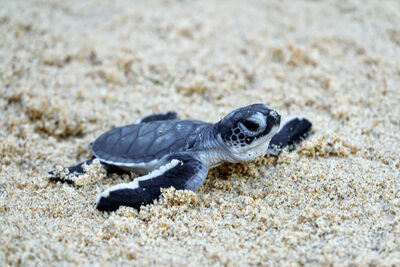
Green turtles
We're kicking off with one of the most wholesome tales from the deep blue: the green turtle has bounced back from the brink of extinction. Once heavily hunted, their recovery can be attributed to reduced fishing, patrol teams guarding females and their eggs on nesting beaches and volunteers helping hatchlings make it safely to the sea (officially the best job ever). Found from Mexico and Costa Rica to the Caribbean, the Seychelles and Australia, global numbers have rebounded enough for the species to be reclassified as 'Least Concern', meaning they are no longer considered at risk of extinction.
And the best part? As these cute critters graze on seagrass, they keep underwater meadows healthy, supporting fish, storing carbon and keeping marine ecosystems in balance - turns out green turtles have been doing conservation work of their own all along.
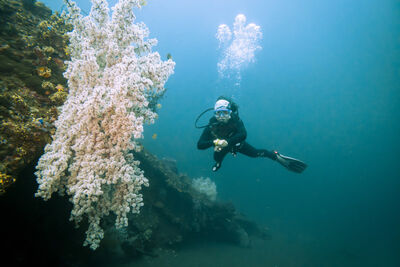
Largest marine protected area in French Polynesia
At the United Nations Ocean Conference in 2025, French Polynesia made waves (pun intended) with its announcement that it will establish the world's largest marine protected area, covering an enormous 1.9 million square miles in the Pacific. That means no seabed mining, no trawling and no purse seining, a commercial fishing method that surrounds entire schools of fish with vast nets - just protection on a staggering scale.
The result? Waters brimming with sharks, whales and sea turtles, and one of the healthiest coral reefs scientists have ever studied. For locals, these protections safeguard culture as much as nature. As for divers, it's pretty cool knowing that when you take the plunge here, you're exploring the largest marine protected area on the planet.
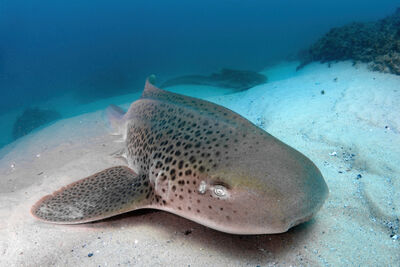
Leopard sharks
In Raja Ampat, Indonesia, conservationists have launched the world's first rewilding programme for the endangered leopard shark (also known as the zebra shark). Starting life with stripes before growing into spot-covered adults, the idea for the programme clicked when aquariums realised their sharks were becoming a little too enthusiastic and producing a surplus of eggs. Many facilities had to separate males and females to avoid overpopulation; meanwhile, the ocean was nearly empty of these predators.
Eggs are sent to hatcheries in Raja Ampat, where they are raised on reef food in pens until they reach just over three feet long. As of 2025, 132 eggs have been sent, 92 pups have hatched and 43 have been freed into their new homes, with the goal of releasing 50 to 75 sharks each year. Indonesian 'shark nannies' manage the hatcheries, while local children help feed and release the pups, cultivating the next generation of shark lovers.
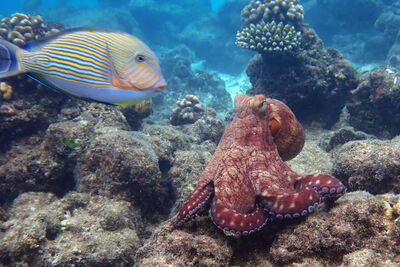
Coral comeback in the Maldives
When a massive bleaching event devastated much of Baa Atoll in the late 90s, the world collectively winced at what it meant for the Maldives' delicate reefs. Fast forward two decades, and the teams at Four Seasons Resorts have planted over 9,000 coral frames, marking a major milestone in hands-on reef restoration. These coral frames serve as underwater scaffolding, giving fragile fragments a stable platform to grow and regenerate, while reefscapers have also been relocating struggling coral to deeper waters to help them survive. Mother Nature seems to approve of this innovation, rewarding divers in the Maldives with flourishing reefs and healthy biodiversity.
Humpback whales
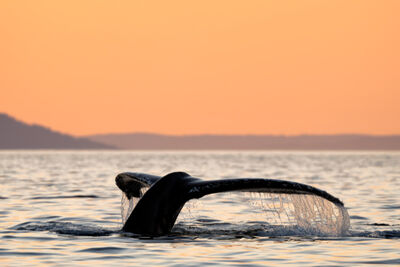
One of our favourite ocean conservation success stories is that of the humpback whale. These giants were hunted almost to extinction, but decades of protection and a global ban on commercial whaling meant they quite literally resurfaced: the number of humpback whales off Australia's coasts has grown from just a few hundred in the 1970s to an estimated 50,000 today. As a result, divers now have the opportunity to witness these incredible animals on migration and hear their euphonic songs - a reminder that when we take care of the ocean, it rewards us in the most spectacular fashion.
Community conservation in Mexico
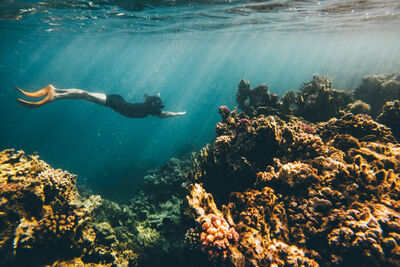
Everyone loves a happy ending, and Cabo Pulmo's conservation story delivers exactly that. In the 1990s, decades of overfishing had left this reef on the east coast of Baja California Peninsula in trouble. Luckily, the local community came together to protect it, pushing for the creation of a marine reserve.
Once fishing nets were traded for snorkels and the ocean was given time to breathe, fish biomass increased by an astonishing 463% within a decade. As it turns out, when communities back the ocean, the ocean backs them right back, and now local livelihoods supported by ecotourism are thriving. Stories like these prove that positive change is possible and can be a powerful catalyst for conservation wins far beyond just one coastline.


