
Like everything else in the world, ocean technology is evolving fast, and for divers, that means shinier gadgets, smarter kit and plenty of revolutionary new gear making waves (pun intended). But it's not all about us humans: innovative dive tech, such as AI-powered reef monitoring and underwater robots, is helping to protect our coral and marine life, so look past the doom-and-gloom headlines for a moment and embrace a bit of ocean optimism. Planning a lifetime of underwater adventures and curious what's coming next? Read on and dive headfirst into the future…
Rebreathers are going mainstream
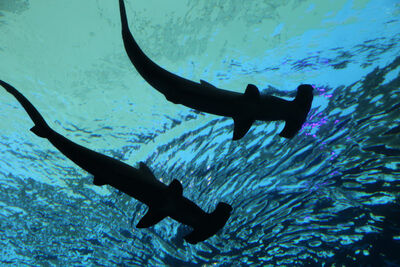
Ever wondered how divers in documentaries manage to swim so close to marine life? The answer: rebreathers. Once reserved for the most hardcore technical divers, rebreathers recycle your exhaled air by removing carbon dioxide and topping it back up with oxygen, which means longer dive time and far fewer bubbles.
Reef residents tend to be less skittish around this more low-key approach to diving, too, so that dream encounter with a school of hammerheads in the Galapagos suddenly feels a whole lot more possible…

Full-face masks for the win
Looking straight out of a sci-fi film, full-face masks are a niche piece of dive tech becoming increasingly popular beneath the surface. Unlike traditional masks and regulators, they let you breathe naturally through both your nose and mouth, making for a more comfortable experience underwater (no more jaw ache after a long plunge).
Better yet, many now come with built-in underwater communication systems, so in the not-so-distant future, underwater gossip could become just as normal as a thumbs-up and enthusiastic pointing at turtles.
The rise of seriously smart dive computers
Dive computers have come a long way from simply telling you your depth and bottom time. These days, they're more like tiny underwater sidekicks strapped to your wrist.
Modern models can track your air usage, navigate underwater routes with integrated compasses and even sync your stats straight to your phone once you're back on dry land - perfect for regaling all your friends and family with the news that you've just smashed your deepest-dive record. Dive tech, or just a very sophisticated new way to show off? We'll let you decide…
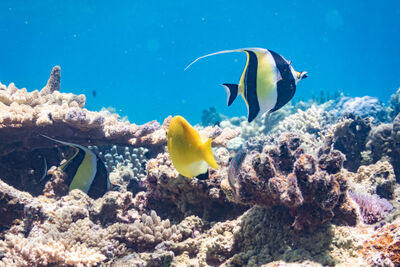
Best of all, they've become far more intuitive and user-friendly over the past few years, making dives less about fiddling with buttons and more about drifting alongside majestic manta rays, swirling schools of barracuda and angelfish dancing above kaleidoscopic coral gardens.
Artificial intelligence is helping monitor reef health
Everyone's talking about artificial intelligence right now, and admittedly, it can feel a little overwhelming at times. But when it's being used to help protect coral reefs and marine ecosystems? Now that's something we can get on board with.
Researchers are currently using AI alongside underwater cameras and sensors to monitor reef health, automatically identifying coral bleaching, emerging diseases and even specific fish species.
It's also helping conservationists gather huge amounts of data far more efficiently, particularly on remote reefs in places like the Solomon Islands, where regular monitoring can be tricky. So, perhaps we should cut AI a little slack - after all, it's busy helping protect our oceans.

Using sound to help restore reefs
Turns out coral reefs aren't the peaceful places we once thought they were. Inaudible to the human ear, healthy ecosystems are actually incredibly noisy, filled with crackles, clicks and constant chatter - and juvenile fish use all this hubbub to find safe places to settle and thrive. When reefs suffer from coral bleaching or pollution, however, that underwater soundtrack begins to fade, making it harder for ocean dwellers to find their way back.
To combat this, scientists are now using underwater speakers to replay the sounds of healthy reefs in damaged areas, aiming to entice marine life to return and help kickstart recovery. One study on the Great Barrier Reef found that this acoustic enrichment doubled the number of sea creatures returning to struggling coral patches. So yes, saving the oceans apparently involves blasting the reef's greatest hits on repeat - who said dive tech had to be all science and no fun?

Ultra-detailed mapping of the underwater world
Still experience a few pre-dive nerves before heading into the deep blue? In the future, ultra-detailed underwater mapping could help make exploring beneath the surface less daunting, both for total beginners and seasoned pros. Thanks to advances in sonar, photogrammetry and LiDAR technology, researchers can now create astonishingly accurate digital 3D models of reefs, caves and shipwrecks - like an underwater Google Earth.
Beyond looking seriously cool, this cutting-edge technology is helping scientists monitor fragile ecosystems, support marine conservation and make underwater exploration safer and more accessible too. Safe to say, those hand-drawn dive briefings may soon be due an upgrade.

Underwater robots exploring where we can’t
We may have saved the best until last. Autonomous underwater vehicles - essentially aquatic drones - are becoming an increasingly important part of ocean conservation, spending weeks at sea collecting data, monitoring reefs and recording soundscapes without human intervention.
Some are even clever enough to follow whale calls in real time, quietly trailing these gentle giants through the deep like something from an Andy Weir novel. These robots are already roaming the seas off Australia and the Maldives, so on your next dive trip here, just think: somewhere beneath you, a robot submarine could be off on its own underwater mission.
And if all this sounds impressive already, just imagine what dive tech could look like a few decades from now…


