
When it comes to the best reef diving on the planet, Indonesia is always in the conversation. And rightly so. The world's largest archipelago straddles the Equator and stretches out along the base of the Coral Triangle. It lies between the Indian and Pacific Oceans and is listed as one of the planet's 17 megadiverse countries. There's plenty going on in the island nation, and facts abound - including many Indonesia diving facts. So, read on for our list of ten inspiring Indonesia facts to whet your appetite for your next dive holiday…
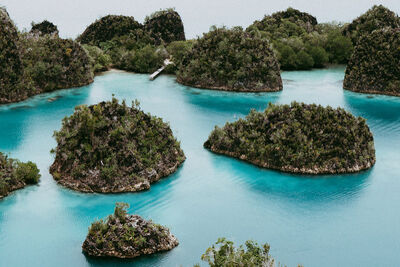
1. Indonesia doesn’t have the most islands in the world
While it's one of the more common Indonesia facts that it holds the title as the world's largest archipelagic country (entirely made up of islands), Indonesia only ranks as the seventh country in the world with the most islands. Its count of 17,508 is dwarfed by Scandinavia, with Norway topping the list with a whopping 320,249 islands!
It does lay claim to three of the planet's ten largest islands, though (or at least part of them). Indonesia shares the world's second-largest island (New Guinea) with Papua New Guinea, and it shares the world's third-largest island (Borneo) with Malaysia and Brunei. The world's sixth-largest island (Sumatra) covers 171,068 square miles and is entirely Indonesian.
2. Indonesia is home to the best place on Earth to see mola mola
The island of Nusa Penida is the world's premier dive destination for seeing the bizarre-looking mola mola. Sitting at the bottom of the Lombok Strait, it's reached via a short boat ride from Bali's southwest coast. Here, the warm water of the Pacific Ocean is carried through the Indonesian archipelago by the Indonesian Throughflow current, and as it powers down the Lombok Strait and past Penida, it meets the cooler waters of the Indian Ocean.
Despite preferring cooler waters, many mola mola visit Penida's reefs for their pampering sessions - the island is home to a variety of cleaner fish that enjoy the warmer waters coming from the north. While you can see the mola mola at many dive sites around Penida, Crystal Bay is the best place to see them at the cleaning stations. Just make sure you're prepared for the thermoclines that also result from the mixing of the warmer and cooler waters.
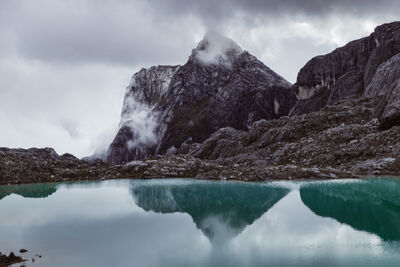
3. Indonesia is home to one of the Seven Summits
The 'Seven Summits' are the highest mountain peaks in each of the seven continents. Indonesia, a transcontinental country spanning Southeast Asia and Oceania, is home to the highest mountain peak in Oceania: Puncak Jaya. The name translates to 'Victorious Peak', and it's found at the eastern end of Indonesia, in the highlands of Mimika Regency on the island of New Guinea.
As well as this accolade, the mountain, also known as Carstensz Pyramid, claims the title of the highest mountain peak on any of the world's islands. It may be the shortest of the Seven Summits, but it's one of the most difficult to climb from a technical point of view (plus, it's not very easy to reach). Indonesia does have plenty of accessible mountain and volcano hikes, however. Mount Agung on Bali and Mount Rinjani on Lombok are great places for hiking (just remember the rules about ascending to altitude after diving...).
4. Indo’s reefs are home to the funkiest fish
Hairy frogfish, flamboyant cuttlefish, ghost pipefish, pygmy seahorses, clown frogfish, mimic octopus - the entire cast of the most beautiful freak show can be found in Indonesia's reefs. In addition to corals of every hue, you can expect to see some of the most colourful, gaudy, and downright funky fish on Indonesia's dive sites. It's also home to a plethora of pleasing nudibranchs, so photographers will have no problem finding cool subjects for their shots.
If you fancy seeing the funkiest fish of all, the psychedelic frogfish, try your luck at Ambon Island. These fish, dubbed underwater photography's Holy Grail, have so far only been seen in the waters surrounding Ambon (but are still rare even here).
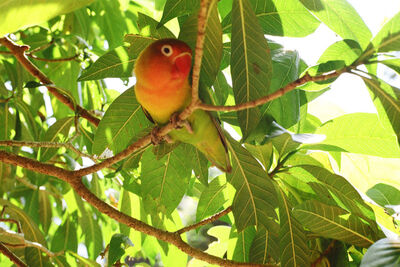
5. And its rainforests house the funkiest birds
There are 45 species of birds-of-paradise, and the majority of them live on the island of New Guinea. Birds-of-paradise are best known for the exquisite plumage of the males, which they use to entice females to mate with them. It was once believed that birds-of-paradise have no feet, which explains the Latin name 'Paradisaea apoda' - 'apoda' means 'no feet'.
In modern Indonesia, they're known as 'Cenderawasih' ('c' is pronounced as a 'ch' sound in Indonesian). New Guinea, coincidentally, is said to be shaped like a bird-of-paradise too, with the Indonesian half of the island taking up the bird's head, and Papua New Guinea bearing its tail feathers. The northwest of Indonesian New Guinea features a promontory called Bird's Head Peninsula. The back of this bird's head forms the western coast of Cenderawasih Bay, a great destination to spot spotty whale sharks as well as birds-of-paradise, and it's just around the corner from Raja Ampat.
Check out the BBC's 'Attenborough in Paradise' to learn more about these stunning birds.
6. Indonesia has delicious cat-poo coffee
Forget Costa and Starbucks; what you really need to wake you up before a full day's diving is a nice hot cup of cat-poo coffee. Kopi luwak, one of the most expensive coffees in the world, is a type of coffee made from beans that have, shall we say, 'passed through' an Asian palm civet - a distant cousin of the domestic cat. The beans ferment slightly as they make their way through the civet's digestive system, where they're then collected and (you'll be pleased to hear) washed before being brewed.
While it may sound like an acquired taste, prices can reach US$100 per kilogram for farmed beans and a whopping US$1,300 per kilogram for wild-collected beans. If you don't want to start your day with a crappy cup of coffee - pun intended - Indonesia is one of the world's biggest coffee producers, so you're never too far from a delicious brew made from 100% undigested beans.

7. And many delightfully aromatic spices
The Maluku Islands mark the division between Asia and Oceania and are known as the Spice Islands, once at the centre of the world's spice trade and, under Dutch rule, a reliable source of income for colonial powers. At this time, spices were much sought after in the kitchens of Europe's wealthier families, and so ship after ship made the long voyage from the Maluku Islands to Europe's major ports during the Age of Discovery.
Spices already popular in eastern cuisine, such as cloves, cinnamon, cardamom, nutmeg, star anise, ginger, pepper and turmeric were shipped across the globe by the Dutch East India Company to satisfy European demands. Today, Indonesia is still one of the biggest spice exporters in the world, and a visit to a spice farm is a treat for your sense of smell.
8. Indonesia has sharks that can walk
But fear not, they won't chase you across the beach. The epaulette shark is a small species of long-tailed carpet shark found in the shallow waters of New Guinea and northern Australia. These sharks hunt at night around the shallow reefs, lagoons and tidal pools of the region, with Indonesia's Raja Ampat Regency being the top spot to see these guys. While they can swim, they are often seen using their pectoral and pelvic fins as feet to wander across sandy bottoms.
If that wasn't cool enough, did you know that the epaulette shark can also walk on land? If they get caught out by the tides and stuck in a tidal pool, where oxygen levels can be low, they can use their muscular fins to walk across the exposed reef to find a larger pool or the open ocean again. They can comfortably survive without water for around an hour.
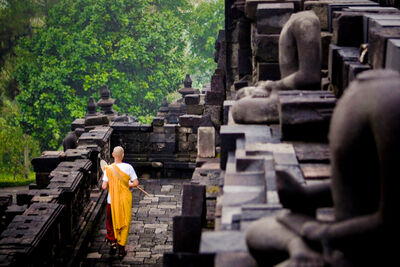
9. Indonesia boasts several impressive temples
If you want to soak up some culture in between dives on your next holiday, Indonesia has several impressive religious sites to explore. The sprawling archipelago has a rich and diverse history and is home to many different religions. Indonesia is the world's most populous Muslim country, but it's also home to areas where other religions make up the majority of the population. Bali, for example, is a Hindu-majority area, while parts of Sulawesi are predominantly Christian.
This religious mix has led to the building (and unfortunate destruction) of many diverse temples over the years. The must-visit Borobudur, in central Java, is the world's largest Buddhist temple and was built in the ninth century. Not too far away from Borobudur, you can also find Indonesia's largest Hindu temple - Prambanan. Visitors to Bali can check out its sea temples, with Pura Tanah Lot being the most famous example. And if you're travelling through Jakarta, check out the magnificent Dian Al-Mahri Mosque, also known as the 'Golden Dome Mosque', to the south of the capital city. Visitors to Jakarta should also check out Regina Caeli Church, a colonial gem and superb example of Dutch neo-Gothic architecture.
10. Indonesia boasts almost-superlative diving
Last but not least on our list of inspiring Indonesia facts is pretty self-explanatory. While there's no one 'best' diving destination on the planet - everyone has different preferences - Indonesia always gets a mention when the subject arises (as it often does during surface intervals). Among Indonesia's myriad islands, the country boasts dive sites among the very finest in the world for reef diving, drift diving and wreck diving, including at one of the most famous wrecks, the USAT Liberty in Bali. Diving in Indonesia offers some of the best chances to see schooling hammerheads and vibrant corals, and it's right up there with the greatest when it comes to muck diving.
Lembeh, in Northern Sulawesi, is the world's most well-known muck-diving mecca. Komodo has some of the world's most enjoyable current diving, while the Forgotten Islands is a top spot for seeing hammerheads en masse. Bali has a little bit of everything, including almost-guaranteed manta and mola mola sightings in the south. In short, with over 17,000 islands, Indonesia is the ideal island-hopping destination for sampling different types of diving on a multi-stop itinerary across the archipelago.


