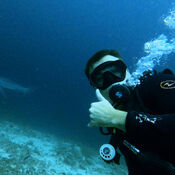
Spanning six countries - Indonesia, Malaysia, the Philippines, Papua New Guinea, the Solomon Islands and Timor-Leste - the Coral Triangle is home to a whopping 76% of the world's coral species. It's safe to say, then, that there's bound to be some curious critters tucked away among all this coral. But what should you be on the lookout for and, more importantly, where should you go? Read on for our shortlist of the top ten creatures in the Coral Triangle and where to find them...
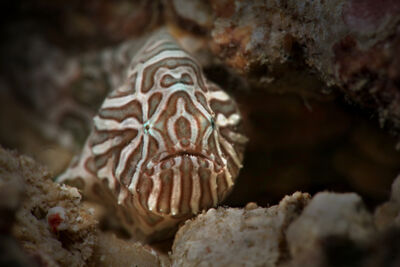
1. Psychedelic Frogfish
Trippy and distinctly two-dimensional, psychedelic frogfish are yellow-brown or peach-coloured members of the anglerfish family, named for their swirling pink-and-white striped pattern. They measure about six inches in length when they're not contracting their head to extend their mouths (yes, really).
Despite looking like they've been plucked from a 60s album cover, they're surprisingly hard to spot. This is because they favour shallow volcanic rubble and broken coral, therefore slow diving, brilliant buoyancy and eagle eyes make all the difference.
Where to find them: Ambon in Indonesia
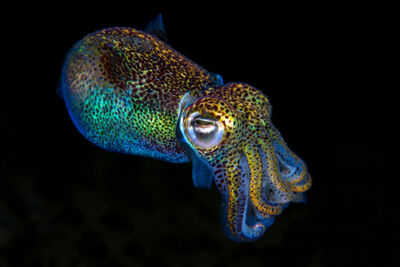
2. Hummingbird Bobtail Squid
Next up: another critter whose colouring is deceptively distinctive. We're talking, of course, about the hummingbird bobtail squid (or Euprymna berryi, if you want to try sounding that out). No larger than a grape, these mesmerising miniatures are navy with electric blue-green spots.
Sun-shy, they remain buried beneath the sand until nightfall, when they emerge to feed and mate. This makes night dives the best way to see them. A trusty torch and expert guide are also essential to the formula.
Where to find them: Indonesia, Japan and the wider Indo-Pacific
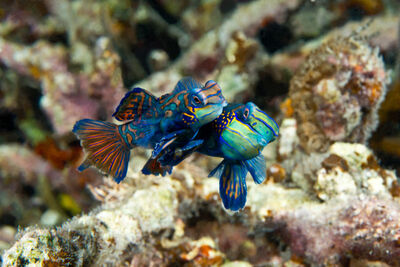
3. Mandarinfish
Certified crowd-pleasers, mandarinfish are vibrant members of the dragonet family. Boasting bright blue bodies complete with thick orange swirls and a burst of green in the centre of their face, they've been known to use their pectoral fins to 'walk' on the seafloor.
Best spotted at dusk, mandarinfish dwell in shallow rubble slopes and lagoon reefs. The real spectacle comes when they pair up after sunset for a brief - albeit beautiful - mating dance. Talk about setting the mood.
Where to find them: Philippines and Indonesia
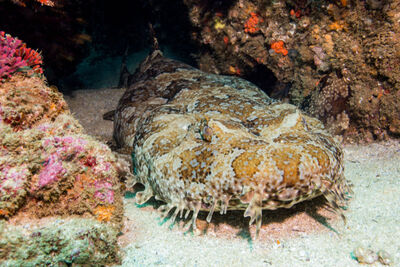
4. Wobbegong
It wouldn't be a creature feature without sharks, but don't be misled: wobbegongs are nothing like their full-bodied, grey-toned peers. Flat, brown and ornately patterned, they're nicknamed 'carpet sharks' because their skin flaps look like - well - carpet tassels.
Not much for movement, these pancaked predators spend most of their time motionless on the sea floor, blending almost perfectly with the coral and rock formations. Patience (and the willingness to question whether what you're looking at is a rock or a shark) equals success here.
Where to find them: Australia and Indonesia
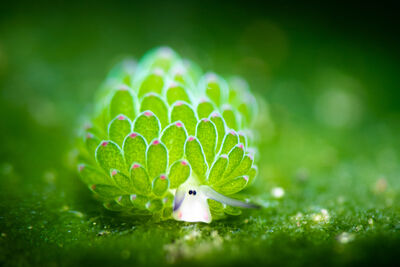
5. Leaf Sheep Nudibranch
After wobbegongs, it only makes sense to dial up the colour. So, let us introduce you to the leaf sheep nudibranch, a cartoonish sea slug covered in teardrop-shaped projections, which are similar in form and colour to a cluster of leaves.
Usually found grazing - hence the 'sheep' moniker - on patches of green algae in shallow muck diving sites, these nudibranchs are incredibly hard to spot, mainly because they're the size of a grain of rice. This makes a patient guide, a careful eye and a killer zoom lens essential.
Where to find them: Indonesia and the Philippines
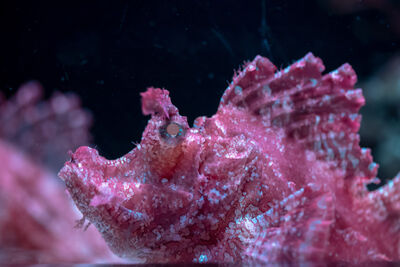
6. Weedy Scorpionfish
Likely to spur remarks of 'what am I looking at?', the weedy scorpionfish is among the ocean's greatest masters of disguise. Coming in a kaleidoscope of colours (yellow, brown, green, black, pink and purple), they're covered in skin flaps that give them the appearance of coral.
Unsurprisingly, they frequent coral rubble, as well as volcanic sand and algae-carved rock. Word to the wise: look for movement rather than a specific shape, as these fish often resemble little more than drifting seaweed.
Where to find them: Ambon, Anilao and Bali in Indonesia
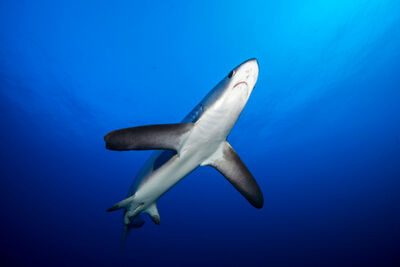
7. Pelagic Thresher
While nowhere near as oddly shaped as wobbegongs, pelagic threshers still feature some rather rogue bodily dimensions - namely their extra-long fins. Pair this with their permanently perplexed expressions, and you have a shark that's more endearing than intimidating.
For many, spotting one of these placid predators remains a dream encounter. And, since they're commonly seen at dawn as they rise from the deep to visit cleaning stations, it's a classic case of the early bird catches the worm (or spots the pelagic thresher).
Where to find them: Malapascua in the Philippines
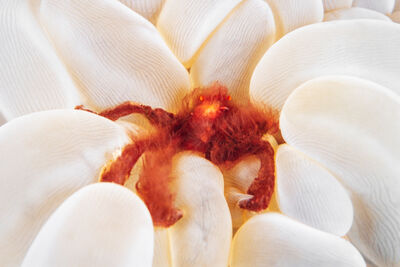
8. Orangutan Crab
From unconventional shapes to unconventional textures, next up on our list is the orangutan crab. Orange? Yes, but also furry - these curious crustaceans measure around an inch and are covered in long orange hairs for the purposes of camouflage (with the consequence of cuteness).
To spot them, you'll need to search sheltered reefs and muck sites. The trick here is learning to recognise their host - primarily bubble coral, which is usually clear or white.
Where to find them: Across Southeast Asia
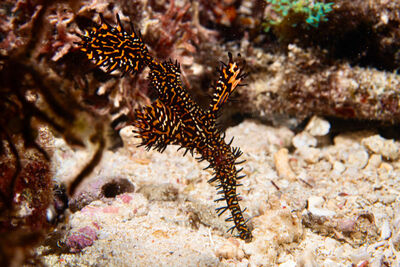
9. Ghost Pipefish
Where the orangutan crab resembles its name, the ghost pipefish behaves like it. Closely related to seahorses, these slender, snouted creatures cosplay their spooky namesakes by masterfully mimicking crinoids, algae and seagrass.
It would make sense, then, that these are the places to look for them, along with black sand mud sites and feather stars. Once again, the golden rule is patience.
Where to find them: Indonesia and the Philippines
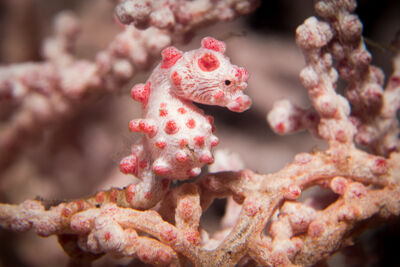
10. Pygmy Seahorse
Closing out our list of the top ten creatures in the Coral Triangle is the pygmy seahorse, another master of camouflage. Petite, pink (or orange) and covered in colour-coordinating bumps, these funky fish rarely exceed an inch in length.
The reason for their adorable appearance is that they spend most of their lives clinging to specific gorgonian sea fan species. Spotting one often feels impossible until a guide points them out, at which point you'll often find that several were hiding in plain sight. Eyes peeled...
Where to find them: Raja Ampat, Lembeh and Anilao in Indonesia


