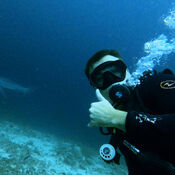
The word 'kelp' might conjure up images of seaweed-style salads, but for us divers, its role under the surface is far more fascinating. Resembling a plant, kelp is actually a type of algae, whose swaying fronds form underwater forests in cold coastal waters. And, though they're a far cry from colourful coral reefs, kelp forests offer an almost otherworldly underwater landscape, complete with ethereal lighting and flitting fish. Keen to take on the kelp? Read on for our top five kelp forest diving destinations…
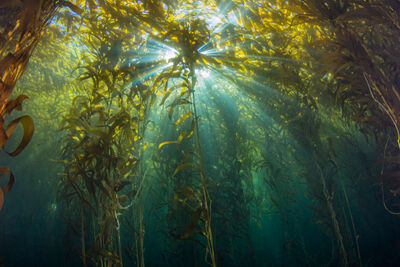
Why go kelp forest diving?
Okay, okay, so it's not the crystal-clear waters and kaleidoscopic reefs of the classic coastal resorts. However, while individual kelps aren't particularly pretty, they're incredibly impressive, growing up to 45m tall and forming 'rainforests of the sea' in record time. Plus, while you're navigating these maze-like forests, you'll likely run into a variety of marine life seeking refuge from the big blue, from cute crustaceans to whopping grey whales.
As if that wasn't enough, kelp forests produce more oxygen per square foot than their land-based counterparts - it's estimated that they offer up an incredible 75% of the oxygen in our atmosphere (yes, really). Combine this with protection for marine critters and coasts themselves, and kelp forests become a pillar of marine sustainability. And, as always, we can have a tangible impact on their conservation. With each kelp forest dive, divers demonstrate the importance of these marine areas, which may push governments and tourist boards to protect them.
1. Monterey and the Channel Islands, USA
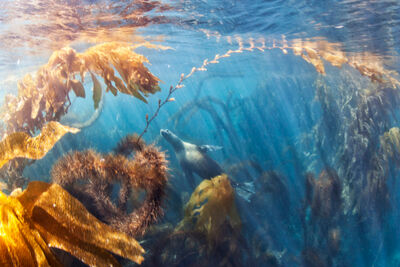
We're kicking off our list of kelp forest diving destinations with one of the stars of this (admittedly niche) show: Monterey and the Channel Islands. Set just along the Californian coastline, Monterey Bay is perfect for those who fancy a dive straight from the shore, with sea lions, harbour seals and sea otters all drifting past. It's also home to a plethora of plankton, which can reduce visibility - but in our opinion, this makes weaving through the kelp all the more exciting.
Keen to venture further out? Hop aboard a boat and travel to the Channel Islands, a colourful Californian archipelago. Protected as a national marine sanctuary, the waters surrounding these rugged islands boast dense kelp forests, which produce a mosaic-like pattern as light filters through the fronds. Cameras at the ready…
A word of warning: kelp thrives in cool waters, but these are particularly chilly. No need to panic, though. Once you've resurfaced and shed your extra-thick exposure suit, simply warm yourself up with a creamy Monterey clam chowder, served in a traditional bread bowl.
2. Tasmania, Australia
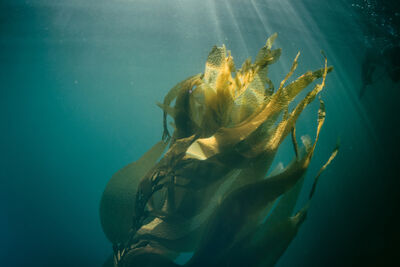
Picture a kelp forest. Okay, now picture it three times the size. Welcome to the Australian state of Tasmania, where the iconic Giant Kelp Forest is nestled just off the east coast. Towering up to 40m tall, giant kelp once spanned Australia's southern coast. But due to rising water temperatures, these forests are now only found in Tasmania, where multiple conservation initiatives protect them - all the more reason to be involved.
The giant kelp that makes up these forests doesn't just form individual trees - it grows into leafy canopies, which makes diving feel wonderfully immersive. Plus, despite its size, the Giant Kelp Forest is perfect for macro diving, with weedy seadragons, cute nudibranchs and teeny seastars all nestled in the sandy floors. Pair that with a hop up the northwestern coast to Ningaloo Reef to swim with whale sharks, and you've a bucket-list trip on your hands.
3. Cape Town, South Africa
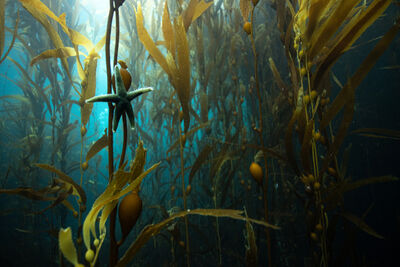
Wildlife lovers, you're in luck. If you're keen to try kelp forest diving but want to ensure you squeeze some marine life encounters into your trip, Cape Town is the place to start - not least because it was the filming location of My Octopus Teacher, where legendary ocean enthusiast Craig Foster met his eight-armed friend in a kelp forest in False Bay.
It goes without saying that you'll likely see octopi, but there's plenty of other marine marvels swimming through the surge. When I explored these waters earlier this year, I was lucky enough to see pyjama sharks and shysharks weaving between the shimmering strands. As if that's not enough, I did as Foster did and made friends with a Cape fur seal, who followed me diligently for the last 20 minutes of my dive. Talk about adorable.
4. Baja California, Mexico
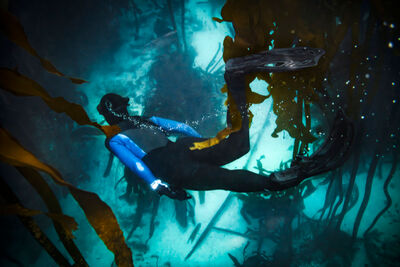
Continuing the marine-life theme, next up is Baja California. We often shout about this legendary dive destination for its whale- and shark-spotting opportunities, but the area's kelp forests are an unsung hero, providing a vital habitat for sealife and helping to keep the ecosystem afloat (if you'll pardon the pun). Plus, the waters here are generally warmer than Monterey's mild waves, meaning you can take on an American kelp forest diving trip without zipping up those extra layers.
Mask up and dive down to weave through rows of giant kelp off the coasts of San Benitos and Puerto Salina, keeping your eyes peeled for macro critters and dodging playful seals swirling their way through the surf. Dig deeper, and you might even be able to spot spooky bat rays scanning the seafloor for a snack - another one to tick off your marine life wishlist.
5. Hokkaido, Japan
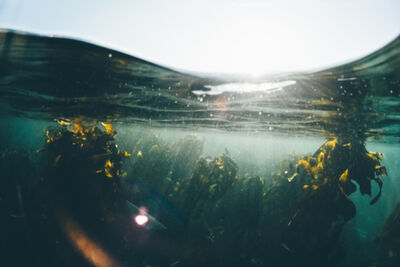
We're well-versed in the joys of a culture and dive combo, so it's only right that the last destination on our list is Japan. Unlike the tropical waters of the south, Hokkaido's cooler climes mean it boasts a number of coastal kelp forests, including Hakodate Usujiri, where you can spot extraterrestrial-looking cliones, and Shiretoko Rausu, where rare Rausu kombu kelp grows into an impressive ecosystem.
Fancy filling your boots with steaming bowls of ramen or smoky yakitori skewers before you pull on your fins? Start your kelp forest diving trip off with a stint spent sampling Tokyo's foodie scene before heading to Hokkaido. Or, if you'd prefer to keep your trip active, combine Hokkaido with Honshu for hiking and biking, or hop all the way down to Okinawa for contrasting coral reefs and pristine shores.


